


The first time I put on my ruck vest, I felt like a badass! It was heavy, and I knew I would rock this walk…
Well…
I ended up feeling it! Realllllly feeling it.
It is definitely a harder walk with a weighted vest. I felt like I kept having to pull it up as it would sink down my back a little (I just needed to tighten straps). When I woke the next day, WOW - my ass was sore! As a certified personal trainer, I know about DOMS, but I was still pretty surprised at the soreness I felt.
I really felt it in my glutes. Fast forward after months of rucking, guess what? My ass looked better and fuller. This comes from a girl who doesn’t have much of a bum. I loved it!
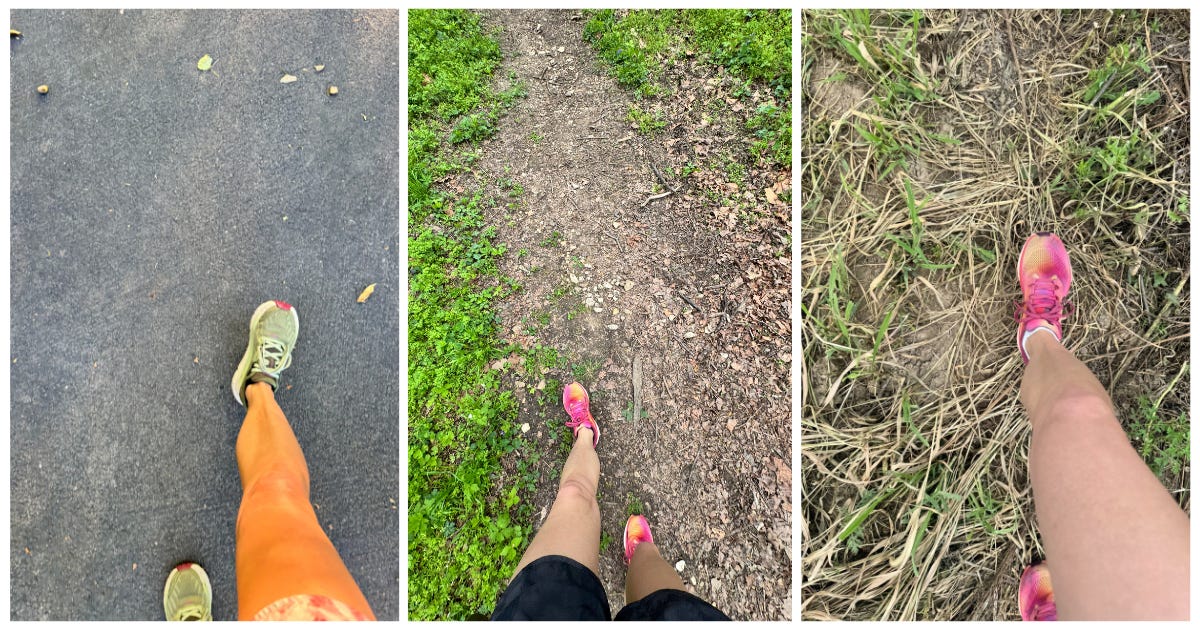
Why rucking is awesome (and a great fitness tool)
Did you know that it started as a military training workout where soldiers carried a heavy pack (rucksack) and walked for many miles?
You’ll hear people call it a few different things. Rucking, ruck walking, weighted vest walking, or rucksack walking. Technically, rucking means walking with weight in a backpack. Weighted walking is walking while wearing a weighted vest. Buttttttt… I just call it all rucking. At the end of the day, it’s all the same thing.
Rucking sits in the spot between zone 2 cardio and active resistance training, so you’re building endurance while doing something as simple as going for a walk.
Rucking can burn up to three times as many calories as regular walking. Hellllooo! That makes it pretty comparable to jogging, and you won’t have as much impact on your joints. I cut back on jogging to save my joints, so rucking is such a blessing IMO.
If you’ve ever worn a weighted vest, you know that you’re getting some cardio in. Your heart rate will be elevated into an aerobic zone, so try to ruck for at least thirty minutes per session.
One of the things I love most about rucking is that it doesn’t require any fancy equipment or going to the gym (I don’t go to the gym anyway) to make a real difference. Your legs power every step, while your core, back, shoulders, and upper body work to stabilize the load. Ultimately, it’s a damn good full-body workout!
How rucking supports longevity
Have you ever heard of sarcopenia?
It’s something every single one of us experiences. Starting around age 30, we naturally begin to lose muscle mass, and once we hit 60, that decline speeds up. There’s something you can do about it! Rucking builds and protects lower body muscle, making it one of the simplest ways to keep sarcopenia at bay.
Additionally, rucking has an impact on bone density - every time you hit the ground with that weighted vest, you are promoting bone density, which can help to prevent osteoporosis.
Another thing I’ve found to be hugely beneficial is posture correction. Since I’ve been rucking, I am not slouching as much. Rucking naturally activates your spinal erectors and forces your shoulders back.
Here’s a quick posture check:
Your head should be over the ribs, ribs over the pelvis, shoulders relaxed, steps are natural, and no exaggerated leaning forward or backward.
I find there is a mindset benefit too! I feel like a badass when I walk with a weighted vest! There’s something quietly powerful about it…
Rucking gives you evidence of your own capability. You can feel the resistance and the extra challenge of being able to carry the load.
Think about it like self-efficacy: the belief that you are capable of taking action and handling difficult things.
For me, that is the real “badass” benefit.
This is challenging, and I can still do it.
What muscles does rucking actually target
Upper back (trapezius + rhomboids)
Spinal erectors
Core muscles
Glutes + hamstrings (hammies)
Quadriceps (quads) + calves
How to choose the right weighted vest
The key is to start smarter, not heavier.
There’s a general rule called the 10% Rule for ruck walking. Beginners start with a load no greater than 10% of their body weight. So, a 150-pound person would start with a 15-pound weighted vest.
Your backpack (if using one) should sit high between your shoulder blades, with the weight balanced between your shoulders and hips, rather than pulling you backward or weighing down one area. If you do notice yourself leaning forward, slowing down, or feeling pretty wiped out, it’s probably time to lighten your load.
Gradually increasing the weight and/or distance over time is the safest approach to ruck walking.
I started with a 5-pound weight in a backpack. Eventually, I moved up to a 10-pound weight, but honestly, because it was at the bottom of the backpack, it didn’t feel good on my back. It’s best to use a weight specifically made for a rucksack. They’re designed to sit flat and fit securely against your back, which keeps the load stable and balanced while you walk.
I ended up buying a weighted 12-pound vest. But if I ever want to go heavier, I will have to buy another vest. Here’s the vest I use.
This is the vest that I use:

How to walk with a weighted vest the right way
Remember to keep your gaze forward, shoulders back, and try to embrace your core. That is something I always do no matter what kind of walking I do - it truly makes a difference.
It’s important to have rest days from rucking. Give yourself 48-72 hours of recovery between rucking sessions. Basically, don’t ruck-walk back-to-back days.
*The 8-week progressive rucking plan*
Reminder: please clear any new fitness routine with your doc/healthcare provider before you start. If you feel pain while working out, pause your routine and talk to your doc.

Load should be no more than 10% of your body weight
Distance/time will be 1 mile (up to 1.5), or you can simply do a 20-25 minute walk (no inclines)
Focus on posture. Keep your chest up and shoulders back (away from ears).

Load should be no more than 10% of your body weight
Distance/time will be a little bit longer - 30 to 40 minutes per session
Maintain zone 2 cardio where you can still hold a conversation but cannot easily sing. I practice this by trying to sing ‘happy birthday’.

You can increase your load to 12-15% of your body weight OR walk inclines with the same weight as weeks one through four.
Distance/time should increase to 2 - 2.5 miles, or 60 minutes
Make sure you are focusing on engaging your core

Load should be no more than 15% of your body weight if you’re not doing inclines.
Distance/time on these weeks will simply be 45-60 minutes of continuous rucking.
At this point you’re building great physical conditioning and capacity. Do you feel the mental stamina?
Here’s a PDF of the plan with a weekly checklist to mark off the days you ruck-walked!


CPT insider tips
Wear supportive sneakers or trail shoes with a good heel-to-toe drop due to the extra load.
Make sure the weights inside your pack are stabilized and can’t slide side-to-side or bounce while you move.
Listen to your body. If you’re experiencing pain, that’s a sign to stop.
More exercises you can do wearing a weighted vest
Farmer’s carry
How to do it: Hold two heavy kettlebells or dumbbells at your sides. Pack your shoulders down and back, engage your core, and walk with short steps for 30–60 seconds.
Planks
How to do it: Set up on your forearms and toes on the ground. Engage your core and squeeze your glutes as hard as possible. Hold for 20–30 seconds with that tension.
RDLS! Romanian deadlifts
How to do it: Hinge at the hips while keeping a slight bend in the knees and keep your back flat. Lower the weight along your shins until you feel a deep stretch in the hamstrings (you’ll feel it), then slowly go back to the standing position (drive through your heels).


Resources you might find helpful:
➡️ Nutrition-Bar posts where you’ll find recipes and foodie info.
➡️ Health Coach in your pocket page.
➡️ 10-Minute Method because healthy can start with ten minutes.
➡️ She Walks Society by #thewalkingqueen.
➡️ If you are brand new to Grow Healthier + Happier, here’s an intro to learn more: About me and this publication.
Cheers to your next rucking adventure ~

All material on the Grow Healthier + Happier publication is provided for educational purposes only are not intended to treat, diagnose, cure or prevent any disease. Always seek the advice of your physician for any questions you have about a medical condition, and before undertaking any diet, exercise or other health-related programs.
I may earn a commission from some of the links in this post. Thank you in advance if you make a purchase! It sure helps!
Can’t beat walking but I’m going to need to see what this ruck-walking is all about! :))
Have any rucking or walking questions? Just ask them here or shoot me a private message!